
Company · · 5 min read
The case for provider-agnostic document AI
Why locking into a single vendor for document intelligence is a strategic risk, and how open architectures deliver better outcomes.
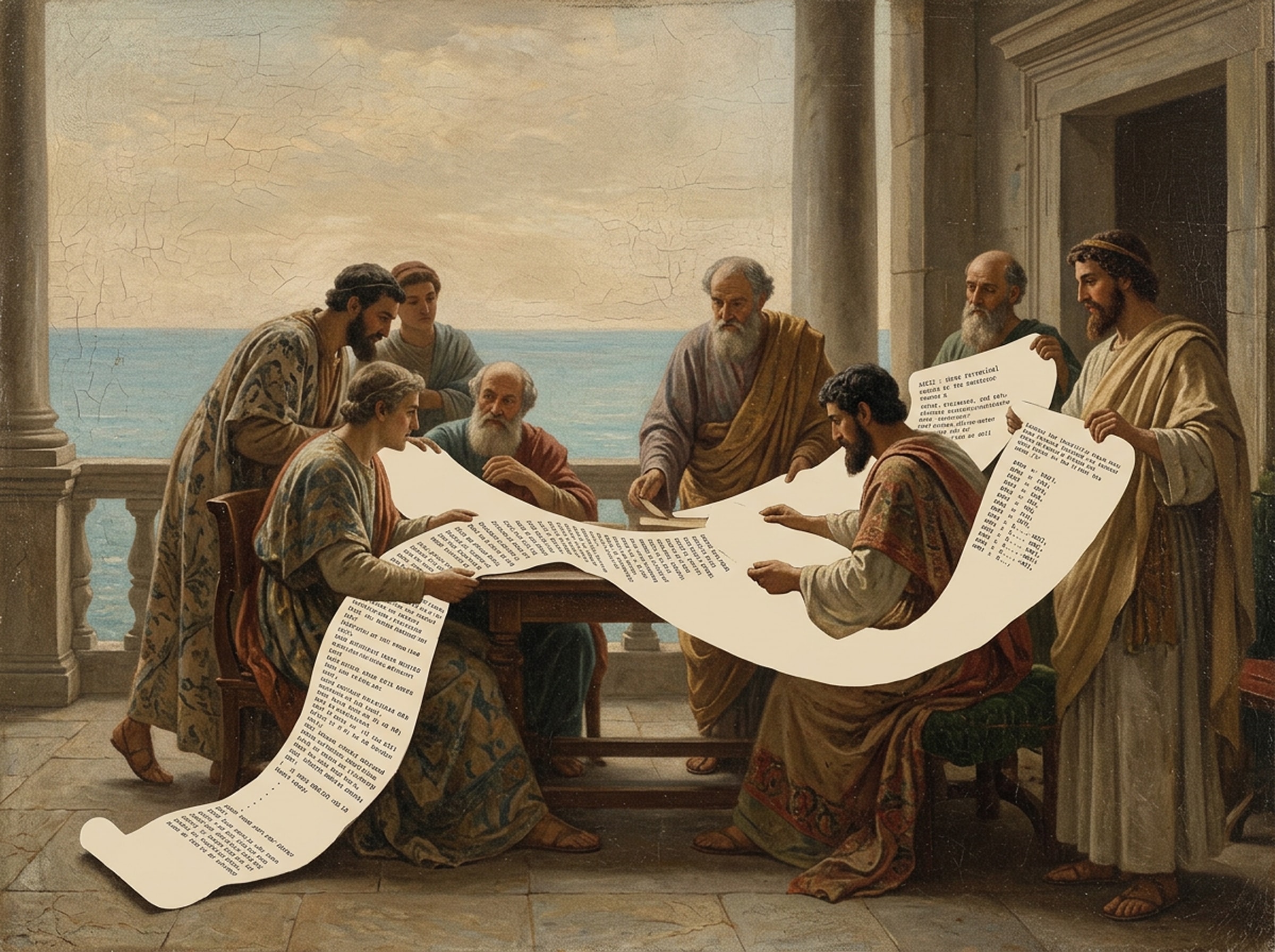
The document AI market is consolidating fast. AWS bundles Textract with Comprehend. Microsoft weaves Form Recognizer into Azure and Copilot across Microsoft 365. Google ties Vertex AI to Document AI. Each creates a gravitational pull toward the rest of their ecosystem, and each makes it a little harder to leave.
For organizations that value flexibility, this trend is worth paying attention to.
How lock-in actually happens
Vendor lock-in in document AI is subtle. It does not arrive as a single decision. It accumulates.
It starts with a proprietary schema format. Your extraction configurations and training data live inside the vendor's platform in a format only their tools can read. Then you invest months labeling documents and fine-tuning a vendor-specific model. That training investment is non-portable. A model fine-tuned on Azure Form Recognizer cannot be deployed on AWS Textract, and vice versa.
Then come the integrations. SDKs, workflow tools, and data pipelines all built around a specific API. Before long, switching providers means rebuilding from scratch.
The cost is not just financial. It is strategic. When your extraction pipeline depends on a single provider's pricing, availability, and roadmap, you have outsourced a critical business capability to someone else's priorities. Forrester has warned that large enterprise vendors are "keenly aware of the monumental organizational effort associated with switching vendors" and use AI to deepen platform dependency.
What happens when that provider gets acquired and pricing changes overnight? VMware customers found out after Broadcom's acquisition, facing price increases of up to 10x along with costly disruptions to deeply integrated systems. An insurance company that built its claims handling and risk assessment around a single AI vendor discovered it could not adopt a competitor's superior risk prediction model because the platform used proprietary data handling. Changing everything would have taken over a year.
The switching cost reality
When Builder.ai entered insolvency in May 2025, businesses that relied on its AI platform lost access to their applications, data, and source code overnight. The Microsoft-backed company, once valued at over $1.3 billion, owed roughly $85 million to AWS and $30 million to Microsoft. Customers had no data portability and no way to export their work. Many were forced to rebuild from scratch.
Switching costs break down into four categories: rewriting code for new APIs, breaking long-term contracts, retraining teams on new tools, and converting proprietary data formats. For organizations with hundreds of document processing workflows, migration costs can easily reach seven figures. Some companies have faced bills in the hundreds of thousands just for data egress fees when trying to extract their own data.
What open architecture looks like
An open architecture means standard interfaces, portable configurations, and the freedom to swap providers without re-engineering your pipeline. In practice:
JSON-based extraction schemas are becoming the common language. Your extraction logic, field mappings, and validation rules live in your codebase, not the vendor's platform. They work across any LLM or extraction engine.
Abstraction layers normalize different providers' APIs behind a single interface. Invoice extraction might route to one provider while medical records go to another. You pick the best tool for each document type without rebuilding your pipeline.
Self-hosted deployment means your processing runs on your infrastructure. No data leaves your environment. No recurring licensing fees that scale unpredictably with volume. And when a better model appears, you adopt it without a migration project. This is the architecture behind Doclo's open source engine.
The open-source document AI landscape has matured considerably. Tools like Unstract offer AI-stack-agnostic document processing that integrates any LLM, vector database, or text extractor. Vision-language models like Qwen2.5-VL and DeepSeek-VL2 provide strong open alternatives to proprietary extraction. Libraries like Camelot achieve 99% accuracy on structured table extraction. These are not experimental projects. They are production-ready components.
The strategic argument
According to Flexera's 2025 State of the Cloud Report, 89% of enterprises now have a multi-cloud strategy. 70% use a hybrid approach combining public and private clouds. The infrastructure thinking has caught up. The document processing layer should follow.
When you can credibly switch providers, you have real negotiating leverage at renewal time. When your extraction schemas are portable, a new regulation or a new market does not mean a new platform. When your models run on your hardware, an acquisition or a pricing change at your vendor does not become your emergency. The deployment flexibility to run on-premise, in the cloud, or hybrid is a direct consequence of this architectural choice.
This is not about being anti-cloud or anti-vendor. It is about maintaining optionality. The best technology choice is the one that preserves your ability to make a different choice later.
The organizations that thrive over the next decade will be the ones that can adapt their technology stack as the landscape shifts, without starting over each time. In a market projected to reach $27.6 billion by 2030, the cost of being locked in will only grow.
Ready to solve your document challenges?
Talk to our team about how Doclo can fit into your workflow. No commitment, just a conversation.